
 By admin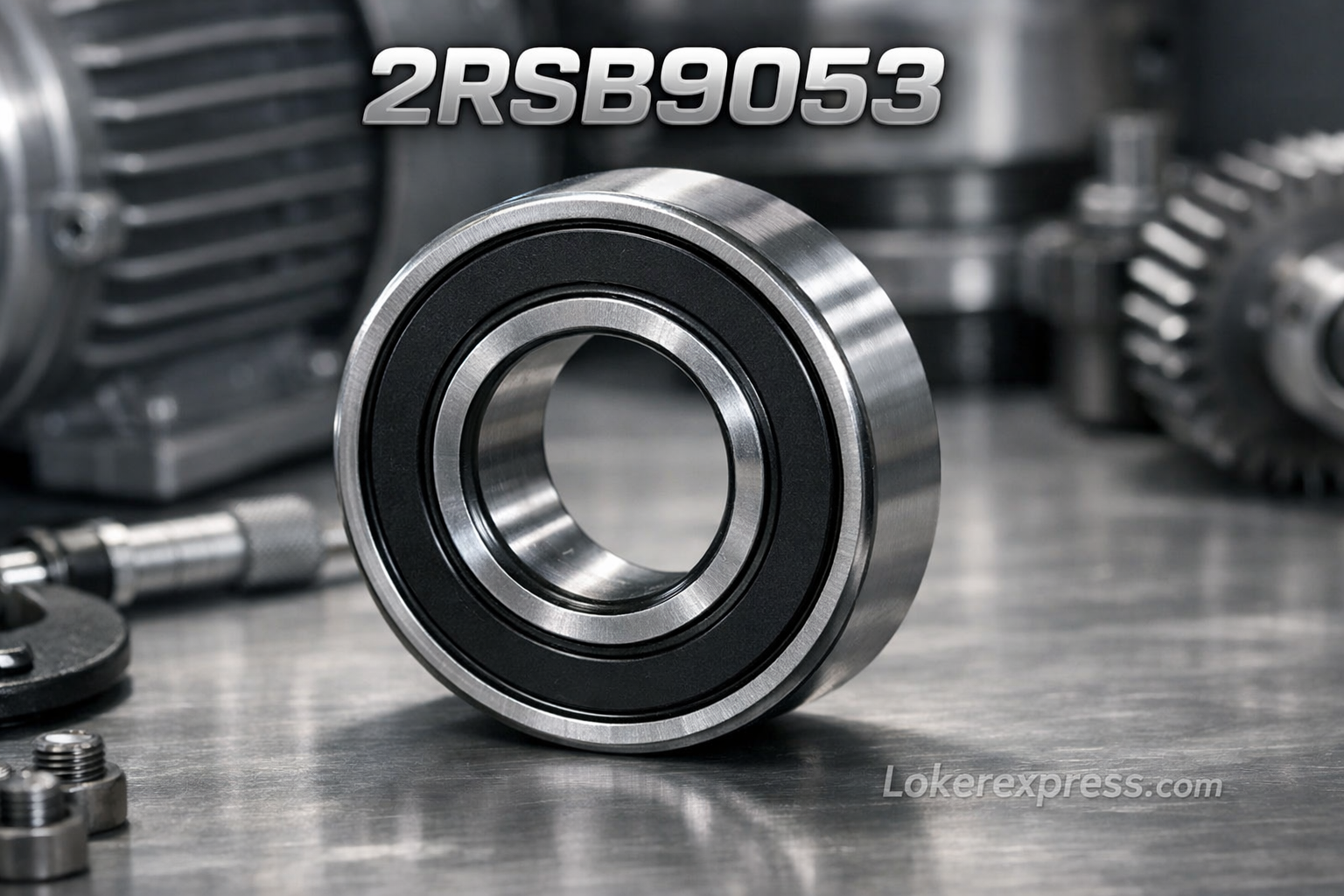
Introduction: Understanding What 2RSB9053 Really Means
If you’re looking for information about 2RSB9053, chances are you’re dealing with a bearing replacement, machine repair, or parts sourcing issue. This kind of code often appears on worn bearings, packaging labels, or supplier listings, and it can be confusing if you don’t work with bearings every day. You may be asking yourself what this code actually refers to, whether it’s standardized, and how to make sure you’re choosing the correct replacement.
This article is written for technicians, mechanics, engineers, maintenance teams, and even DIY users who want clear, practical answers. You’ll learn what 2RSB9053 typically represents, how sealed bearings work, where they’re commonly used, and how to safely select the right equivalent when an exact match isn’t available. By the end, you’ll know how to move forward with confidence instead of guessing.
What the Code 2RSB9053 Typically Refers To
The code 2RSB9053 is not a universally standardized bearing number like some ISO or DIN designations. Instead, it’s best understood as a bearing identification or reference code that usually points to a sealed rolling bearing, most often a ball bearing. The most meaningful part of the code is “2RS,” which strongly indicates that the bearing is sealed on both sides.
In real-world use, codes like this often come from OEM part systems, private-label packaging, or distributor catalogs. That means two suppliers might use the same reference to describe similar but not identical bearings. This is why relying only on the code without confirming physical specifications can lead to problems.
Think of 2RSB9053 as a label that narrows the field. It tells you the bearing style and sealing concept, but you still need to verify dimensions, load capability, and internal design before buying a replacement.
What “2RS” Means in Bearing Terminology
To really understand 2RSB9053, you need to understand the “2RS” part of the name. In bearing terminology, 2RS means the bearing has rubber or elastomer seals on both sides. These seals are designed to keep grease inside the bearing while blocking dust, moisture, and other contaminants from entering.
Sealed bearings are especially popular because they are typically lubricated for life. You don’t need to add grease during normal service, which saves time and reduces maintenance errors. The tradeoff is a small amount of additional friction from the seal contact, but in most applications this is negligible.
For you as a user, the key takeaway is simple: if your original bearing was marked 2RS, replacing it with an open or shielded bearing may shorten service life, especially in dirty or humid environments.
The Most Common Bearing Type Behind This Code
In most cases, a bearing referenced as 2RSB9053 will be a deep groove ball bearing. This is the most widely used bearing type in the world, and for good reason. Deep groove ball bearings are compact, efficient, and capable of handling both radial loads and moderate axial loads in either direction.
These bearings are commonly used in electric motors, pumps, conveyors, fans, gearboxes, and automotive components. When combined with double-sided seals, they become a reliable, low-maintenance solution for everyday machinery.
From practical experience, if you removed a bearing marked 2RSB9053 from a motor, roller, or rotating shaft, there’s a very high chance it’s a sealed deep groove ball bearing designed for continuous, moderate-speed operation.
Why Sealed Bearings Are Chosen Over Open Bearings
This section explains the “why” behind sealed bearing choices, which helps you decide whether the same design still makes sense for your application.
Sealed bearings are chosen because they offer long service life with minimal attention. Once installed, the grease stays inside, and contamination stays out. This is especially valuable when equipment runs in dusty plants, outdoor environments, or areas where frequent maintenance is not realistic.
Open bearings, on the other hand, rely on external lubrication and clean conditions. If your machine originally used a 2RS-style bearing, switching to an open design usually introduces risk rather than savings. In many cases, the cost difference is small compared to the downtime caused by premature failure.
Key Specifications You Must Confirm Before Replacing 2RSB9053
This is one of the most important parts of the article because it directly affects whether your replacement will work. Even if the code looks right, you should always confirm the following details before purchasing:
- Inner diameter (shaft size)
- Outer diameter (housing size)
- Bearing width
- Seal type (double sealed)
- Internal clearance if known
The safest approach is to measure the old bearing with calipers after removal. If the bearing is damaged, measure the shaft and housing instead. This removes guesswork and avoids ordering the wrong size.
You should also consider operating speed, temperature, and load. If the bearing runs hot or at high speed, seal material and grease type matter more than you might expect.
Typical Applications Where This Bearing Is Used
Bearings identified by codes like 2RSB9053 are found in a wide range of industries. In electric motors, they are often used on both the drive and non-drive ends to provide quiet, smooth rotation with minimal maintenance. In conveyors and rollers, sealed bearings prevent dust from grinding away internal surfaces.
Automotive and agricultural equipment also rely heavily on sealed bearings, especially where exposure to water and dirt is unavoidable. In these environments, the seal does most of the work, protecting the rolling elements from damage that would quickly destroy an open bearing.
If your equipment originally used this type of bearing, it’s a strong signal that protection and reliability were higher priorities than ultra-low friction.
How to Choose a Safe Equivalent When the Exact Code Is Unavailable
This section answers a very common question: what do you do when you can’t find 2RSB9053 anywhere? The answer is to match the bearing by function and dimensions, not by name alone.
Start with size and type. If the replacement is a deep groove ball bearing with the same dimensions and double-sided seals, you’re already most of the way there. Then consider load rating and speed capability. Choosing a reputable manufacturer helps ensure consistent quality, even if the part number looks different.
If you’re unsure, it’s often better to slightly exceed the original bearing’s load rating rather than downgrade. Undersized bearings may fit but fail early under real operating conditions.
Installation and Handling Tips That Extend Bearing Life
Even the best bearing can fail quickly if it’s installed incorrectly. Cleanliness matters more than many people realize. Dirt introduced during installation can undo the benefits of sealing before the machine even starts.
When pressing a bearing into place, always apply force only to the ring being fitted. Pressing through the rolling elements can cause internal damage that leads to noise and vibration later. Avoid hammering directly on the bearing, and never spin a dry sealed bearing with compressed air.
Taking a few extra minutes during installation often adds months or years to bearing life, especially in sealed designs.
Common Problems and How to Diagnose Them
If a bearing like 2RSB9053 becomes noisy, hot, or rough, the cause is usually one of a few issues. Misalignment, excessive load, or contamination are far more common than manufacturing defects.
A bearing that fails quickly after installation often points to incorrect handling or fit. A bearing that runs quietly at first but degrades over time may be exposed to conditions beyond what the seals were designed to handle.
Understanding these patterns helps you fix the root cause instead of repeatedly replacing the same bearing.
Read More: Winkelbohrspindel – Everything You Need to Know in 2025
Conclusion: How to Move Forward with Confidence
The code 2RSB9053 is best understood as a reference to a double-sealed bearing, most commonly a sealed deep groove ball bearing used for low-maintenance, reliable operation. While the code itself may not be fully standardized, it provides valuable clues about sealing and application intent.
Your next step should always be to confirm dimensions and operating conditions, then choose a high-quality equivalent if an exact match isn’t available. By focusing on function rather than just part numbers, you protect your equipment, reduce downtime, and avoid costly mistakes.
If you treat bearing replacement as a careful matching process instead of a quick swap, you’ll get longer service life, smoother operation, and far fewer surprises down the road.