
 By admin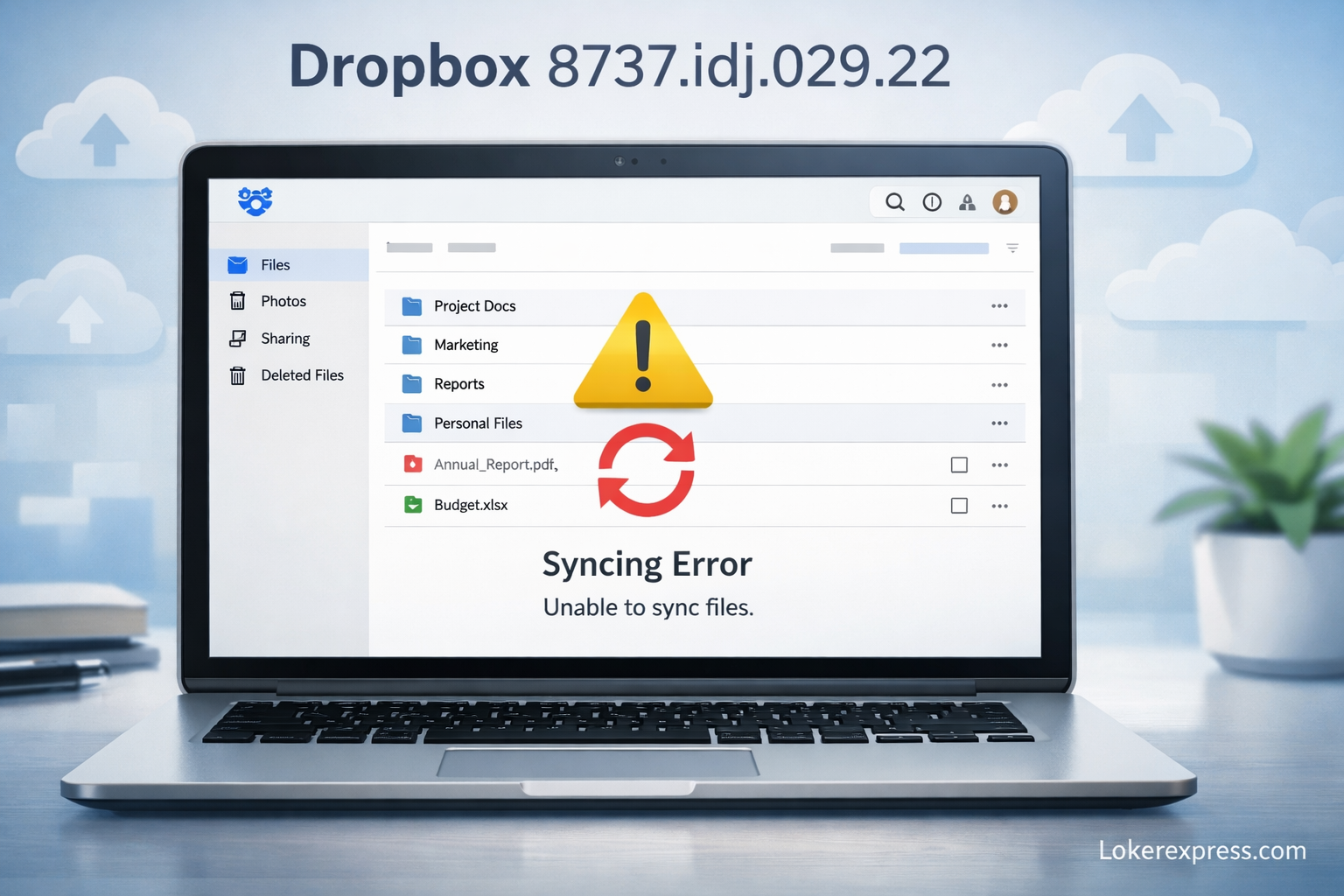
If you searched for “Dropbox 8737.idj.029.22,” chances are you saw this strange code pop up while using Dropbox and felt confused or worried. You might have been syncing files, logging in, or clicking a shared link when something suddenly went wrong. This article is written for you—the regular Dropbox user who wants clear answers, not technical jargon or scare tactics.
Here, you’ll learn what this code usually means, why it appears, and what you should do next. More importantly, you’ll learn how to fix the real problem behind it without risking your files or your account security. Everything is explained in simple English, based on real-world experience with Dropbox issues that people commonly face.
What “Dropbox 8737.idj.029.22” Usually Refers To
This section explains what the code is and what it is not, so you can start with the right expectations.
The code “8737.idj.029.22” is not a standard, publicly documented Dropbox error code. Dropbox normally uses clear messages like “Sync paused,” “Can’t connect,” or “Files not syncing.” Because of this, the code itself should not be treated as a precise technical diagnosis.
In most real situations, this code shows up as part of a broader problem. That problem is usually related to syncing failures, connection issues, app crashes, or login interruptions. Sometimes, it also appears inside browser pop-ups that pretend to be Dropbox warnings, which is where caution becomes very important. The key point is that the code is a symptom, not the cause.
Common Situations Where This Issue Appears
Before jumping into fixes, it helps to recognize when and how this issue usually shows up. This section connects the dots between your experience and the likely root cause.
You may see this code when the Dropbox desktop app stops syncing files and seems stuck for a long time. Some users notice it after a system update, a network change, or switching between home and work internet connections. Others encounter it during sign-in attempts, where Dropbox repeatedly fails to connect or refresh.
Another common scenario is seeing the code inside a web browser as a warning message claiming your Dropbox account is blocked or corrupted. These messages often urge you to take immediate action. In these cases, the issue is not Dropbox itself but a misleading or fake alert designed to push you into unsafe actions.
First Step: Check Whether the Problem Is Local or Global
This section helps you avoid unnecessary fixes by determining where the problem actually lives.
Before changing any settings on your device, pause and ask a simple question: is Dropbox working normally for others right now? If Dropbox is experiencing a temporary service disruption, your app may fail even though nothing is wrong on your end.
You can also check your own account quickly by signing in to Dropbox through a web browser. If the website works and your files are there, your account is fine and the issue is likely limited to the desktop app or network. If both web and app access fail, then account-level or connection issues may be involved.
This quick check helps you avoid deleting files, reinstalling apps, or adjusting security settings when the problem might resolve on its own.
Fixing Dropbox Sync Problems the Safe Way
This section walks you through practical, low-risk steps that solve most Dropbox syncing issues.
Start with the basics. Fully quit the Dropbox desktop app and reopen it, instead of just minimizing it. This forces the app to reconnect and refresh its sync process. Next, make sure your internet connection is stable. Switching briefly to another network, like a mobile hotspot, can quickly reveal whether your usual connection is the issue.
Check your device’s date and time settings. Incorrect system time can interfere with secure connections and cause sync failures. Also confirm you have enough free storage space on your computer, since Dropbox needs room for temporary files even when syncing to the cloud.
If these steps don’t help, look at your Dropbox sync status inside the app. Messages like “Connecting,” “Indexing,” or “Sync paused” give useful clues about what’s happening behind the scenes.
How Firewalls, Antivirus, and VPNs Affect Dropbox
This section explains why Dropbox sometimes works on one network but not another.
Dropbox relies on secure, continuous communication with its servers. Firewalls, antivirus software, VPNs, and proxy servers can interrupt this communication without making it obvious. This is especially common on work or school networks.
If Dropbox works on your home Wi-Fi but fails elsewhere, network restrictions are a strong possibility. Temporarily disabling a VPN or pausing antivirus protection can help confirm this. If Dropbox suddenly works, you’ll know that you need to add proper exceptions instead of leaving security disabled.
On managed networks, the safest approach is to contact the network administrator rather than trying random fixes. This protects both your files and your system security.
Clearing Cache and Reinstalling the Dropbox App Properly
This section covers deeper fixes for stubborn app-level problems.
Over time, Dropbox stores cached data to speed up syncing. If this cache becomes corrupted, the app may behave unpredictably. Clearing the Dropbox cache removes temporary files without touching your cloud data. After clearing it, Dropbox may take some time to reindex your files, which is normal.
If cache cleanup doesn’t help, a clean reinstall may be necessary. This means fully uninstalling Dropbox, restarting your computer, and installing the latest official version. In some cases, an advanced reinstall that removes leftover configuration files is required to resolve repeated crashes or login loops.
Always download Dropbox directly from its official source and avoid third-party “fix tools,” which often cause more harm than good.
When the Code Is a Scam Warning in Disguise
This section is critical for protecting your account and personal information.
If “Dropbox 8737.idj.029.22” appears in a browser pop-up telling you your account is locked, infected, or compromised—and asks you to call a number or click a link—treat it as suspicious. Real Dropbox alerts do not demand immediate phone calls or remote access.
If you interacted with such a message, take action right away. Change your Dropbox password from the official website, review active sessions and devices, and enable two-factor authentication if you haven’t already. Run a trusted antivirus scan on your computer to ensure no unwanted software was installed.
The safest rule is simple: handle Dropbox issues inside the official app or website, never through unsolicited pop-ups.
Strengthening Your Dropbox Account for the Future
This section focuses on prevention so you don’t face similar stress again.
Regularly review the devices connected to your Dropbox account and remove any you no longer use. Use a strong, unique password that you don’t reuse elsewhere. Two-factor authentication adds an extra layer of protection that dramatically reduces the risk of unauthorized access.
Keep your operating system and Dropbox app updated, since updates often fix bugs and compatibility issues. Be cautious when installing system cleaners or optimization tools, as they may interfere with syncing or delete necessary files.
These habits don’t just prevent one error—they protect your data long term.
When to Contact Dropbox Support
This section helps you know when it’s time to stop troubleshooting alone.
If you’ve checked your network, cleared cache, reinstalled the app, and confirmed your account security—and the problem still persists—it’s reasonable to contact Dropbox support. Be ready to describe what the app is doing rather than focusing only on the code you saw.
Details like whether syncing stalls, login fails, or crashes occur help support teams identify the issue faster. This saves you time and reduces frustration.
Read More: Fixing “Error SusBlueZilla New Version”: A Complete Real-World Guide
Conclusion: Focus on the Real Issue, Not Just the Code
Seeing “Dropbox 8737.idj.029.22” can be unsettling, but the code itself is rarely the real problem. In most cases, it points to a syncing issue, a network restriction, a corrupted app state, or a misleading browser alert. By focusing on safe, practical troubleshooting steps and keeping security in mind, you can resolve the issue without risking your files or account.
Your next step is simple. Identify where the problem appears, apply the appropriate fix from this guide, and strengthen your account settings so future issues are easier to handle. Dropbox is a reliable tool when it’s set up correctly, and with the right approach, you can get back to working confidently and securely.