
 By admin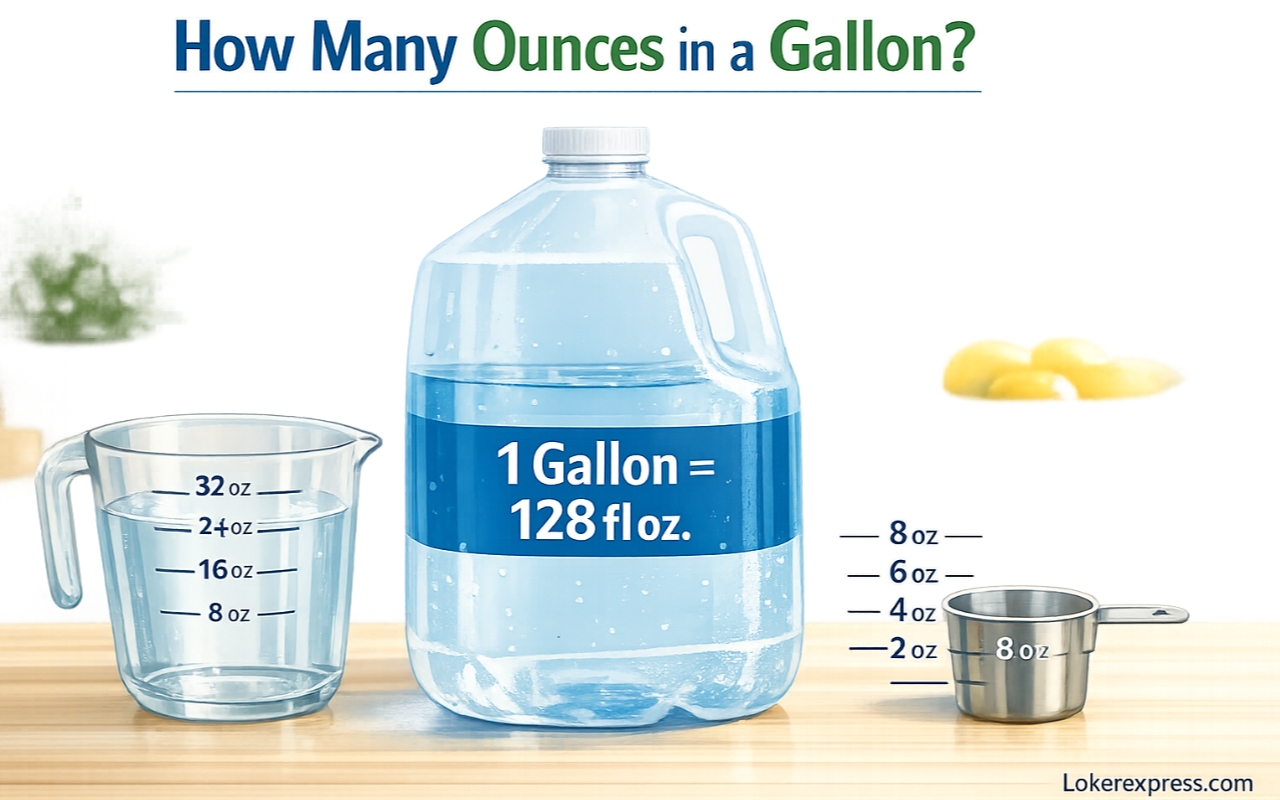
Introduction: Why “How Many Ounces in a Gallon?” Matters More Than You Think
If you have ever followed a recipe, tracked your daily water intake, mixed cleaning solutions, or bought beverages in bulk, you have probably asked yourself, “How many ounces are in a gallon?” It sounds like a simple question, but the answer can be confusing if you do not understand how liquid measurements work. Many people also mix up ounces and fluid ounces or forget that not all gallons are the same worldwide.
This article is written for everyday readers who want a clear, practical, and trustworthy explanation. By the end, you will not only know the correct answer, but you will also understand why it is correct and how to use it confidently in real life. Everything here is explained in simple English, with real-world examples you can actually use.
The Simple Answer Most People Are Looking For
Most of the time, when you ask how many ounces are in a gallon, you are talking about a U.S. liquid gallon. In that system, one gallon equals 128 fluid ounces. This is the number you will use for water, milk, juice, soup, and most drinks sold or measured in the United States.
This conversion does not change. It does not depend on the type of liquid. A gallon of water, a gallon of milk, and a gallon of juice all contain the same volume, which is 128 fluid ounces. Once you know this, many everyday measurements suddenly become easier to understand and estimate.
Understanding Fluid Ounces vs Regular Ounces
Before going further, it is important to clear up one of the biggest sources of confusion. A fluid ounce is not the same thing as a regular ounce. A fluid ounce measures volume, while a regular ounce measures weight.
When you measure liquids like water or oil, you use fluid ounces. When you weigh solid foods like cheese or flour, you use ounces by weight. The numbers may look similar on labels, but they are measuring different things. This is why you cannot reliably convert ounces to gallons unless you are sure you are dealing with fluid ounces.
This distinction matters most in cooking and baking. Liquids should always be measured by volume unless a recipe clearly tells you otherwise. Understanding this difference helps you avoid mistakes and gives you more consistent results.
What Exactly Is a U.S. Gallon?
A U.S. gallon is a standard unit of liquid volume used in the United States. It is officially defined as 231 cubic inches, but you do not need to remember that number to use it correctly. What matters is how it breaks down into smaller units you already recognize.
A U.S. gallon is divided into four quarts, and each quart contains 32 fluid ounces. When you multiply those four quarts by 32 fluid ounces, you get the familiar total of 128 fluid ounces per gallon. This structure is why measuring cups, pitchers, and beverage containers are labeled the way they are.
Once you understand this structure, converting between gallons and ounces becomes logical instead of something you have to memorize.
The Imperial Gallon: Why the Answer Changes Outside the U.S.
If you live in or are reading content from the United Kingdom or some other countries, the gallon means something different. The imperial gallon is larger than the U.S. gallon. Because of that, the number of ounces in it is also different.
An imperial gallon contains 160 imperial fluid ounces. On top of that, an imperial fluid ounce is slightly smaller than a U.S. fluid ounce. This means you cannot safely use U.S. conversions when dealing with imperial measurements.
This difference matters when following international recipes, reading nutrition labels, or comparing fuel or beverage volumes across countries. Always check whether the measurement system is U.S. or imperial before doing your math.
How Gallons and Ounces Are Used in Everyday Life
You may not think about gallons and fluid ounces often, but they show up in daily life more than you realize. Drinking water is one of the most common examples. Many people aim to drink a gallon of water a day, which means consuming 128 fluid ounces over time.
The same conversion helps when buying drinks in bulk, hosting events, or planning meals. If you know how many ounces are in a gallon, you can quickly estimate how many servings you will get from a large container. This is especially useful for parties, family gatherings, or meal prep.
Cleaning solutions, garden products, and even pet care instructions often rely on gallon-to-ounce ratios. Knowing the conversion helps you follow directions accurately and avoid waste.
Converting Gallons to Ounces the Easy Way
This section focuses on how to do conversions without second-guessing yourself. The key is to first confirm that you are using U.S. liquid measurements.
To convert gallons to fluid ounces in the U.S. system, you simply multiply the number of gallons by 128. For example, half a gallon equals 64 fluid ounces, and two gallons equal 256 fluid ounces.
To convert fluid ounces back to gallons, you divide by 128. If you have 32 fluid ounces, that equals one quarter of a gallon. These conversions stay consistent and work every time as long as you are using U.S. fluid ounces.
Common Measurement Relationships That Make Life Easier
Understanding gallons becomes even easier when you see how they connect to other familiar units. Here are a few helpful relationships many people use in daily life:
- One gallon equals four quarts, which helps when recipes scale up.
- One gallon equals sixteen cups, which is useful for cooking and baking.
- One gallon equals 128 fluid ounces, which is ideal for drinks and hydration tracking.
These relationships work together. If you remember just one or two, you can usually figure out the rest without needing a calculator.
The Dry Gallon and Why You Rarely Need It
You may occasionally hear the term “dry gallon,” especially in older texts or agricultural contexts. A dry gallon was historically used to measure dry goods like grains. Today, it is rarely used in everyday situations.
Modern recipes, food labels, and product instructions usually measure dry goods by weight rather than volume. Because of this, most people can safely ignore the dry gallon and focus only on liquid gallons and fluid ounces.
If a measurement ever refers to a dry gallon, it will usually say so clearly. In normal household use, when someone says “gallon,” they almost always mean liquid volume.
U.S. Gallon vs Imperial Gallon: A Quick Comparison
This short comparison helps lock everything into place so you do not mix systems by accident.
| Measurement System | Fluid Ounces in One Gallon |
|---|---|
| U.S. Liquid Gallon | 128 fluid ounces |
| Imperial (U.K.) Gallon | 160 fluid ounces |
The takeaway is simple. Always identify which system you are using before converting. This one step prevents most measurement mistakes.
Read More: Understanding 45.6 Billion Won in US Dollars: What It Really Means
Conclusion: How to Use This Knowledge with Confidence
Knowing how many ounces are in a gallon is a small skill that makes a big difference. In the United States, the answer you will use most often is 128 fluid ounces per gallon. This applies to water, milk, juice, and nearly every liquid you measure at home.
The most important habits to build are checking whether you are using U.S. or imperial measurements and making sure you are working with fluid ounces, not weight ounces. Once you do that, conversions become easy and reliable.
As a next step, try applying this knowledge the next time you cook, shop, or track hydration. The more you use it in real situations, the more natural it will feel, and soon you will not need to look it up at all.